 Zero Float
iPhone & iPad · Free · No accounts
One sheet a day.
The same one
for everyone.
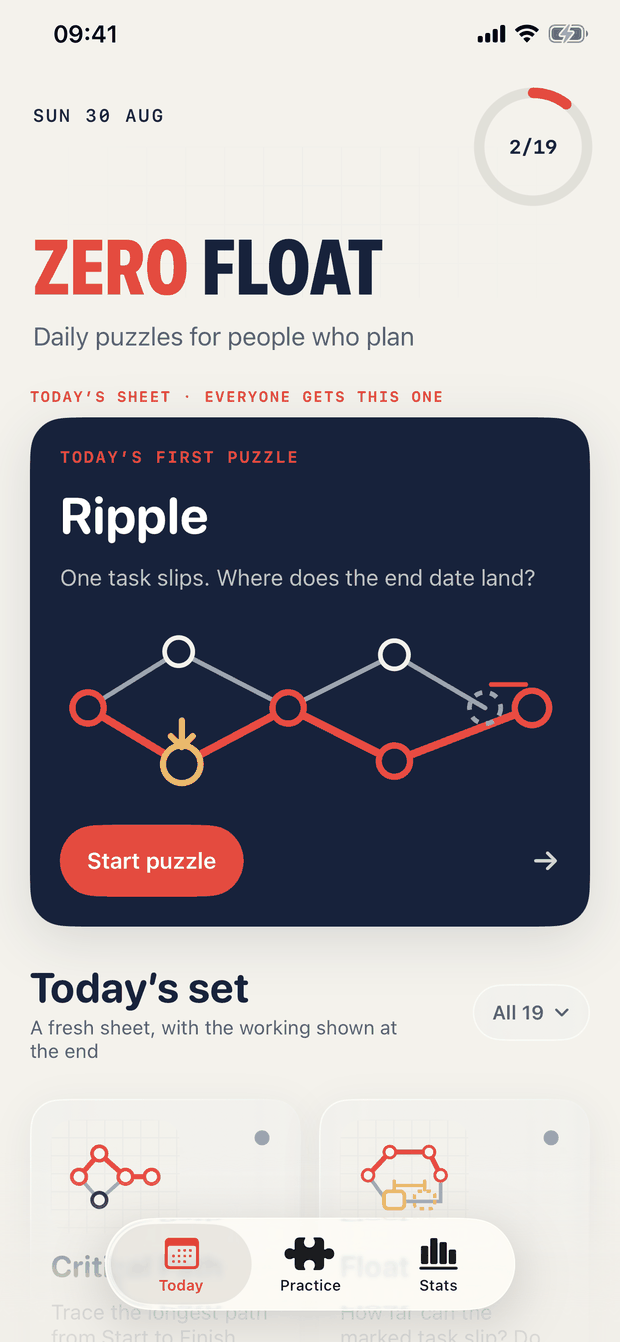
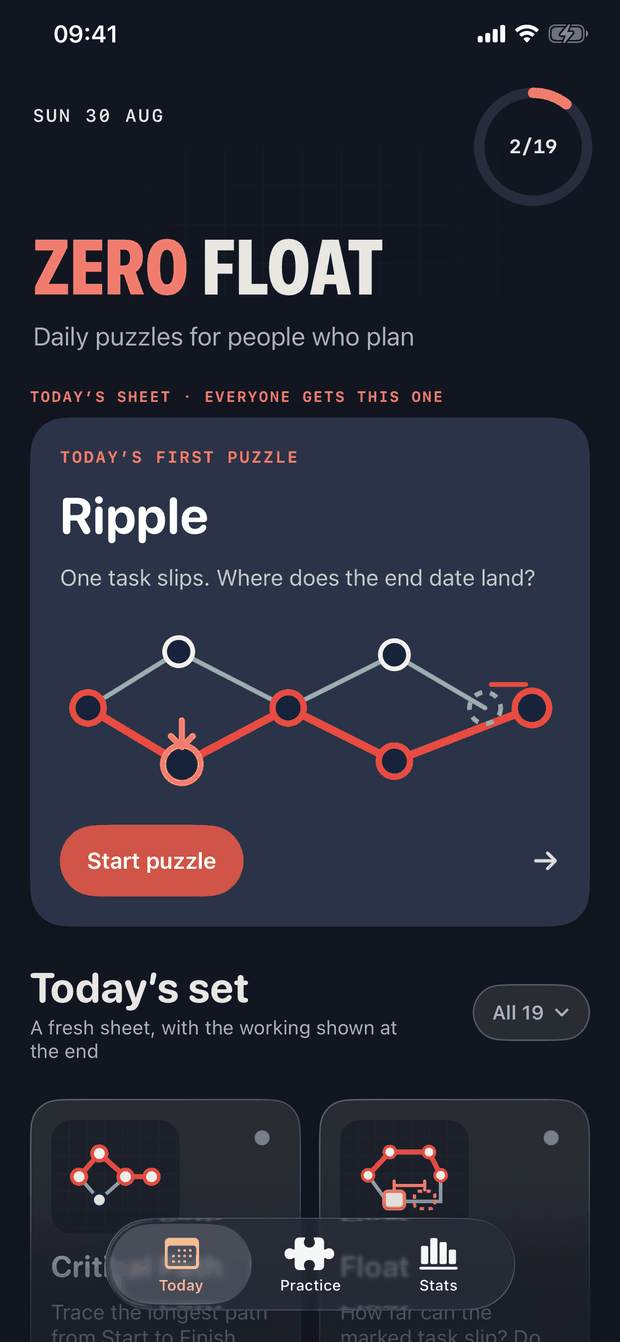
Zero Float is a daily puzzle built from the work planners, schedulers and project controls people actually do. Trace a critical path. Read the run-rate. Find the ledger line that will not reconcile. Nineteen puzzles, one dealt every morning, about five minutes each — and every answer shows its working.
Free on iPhone and iPad. No accounts, no ads, no analytics.
Every sheet shows its working
The reasoning, not the mark
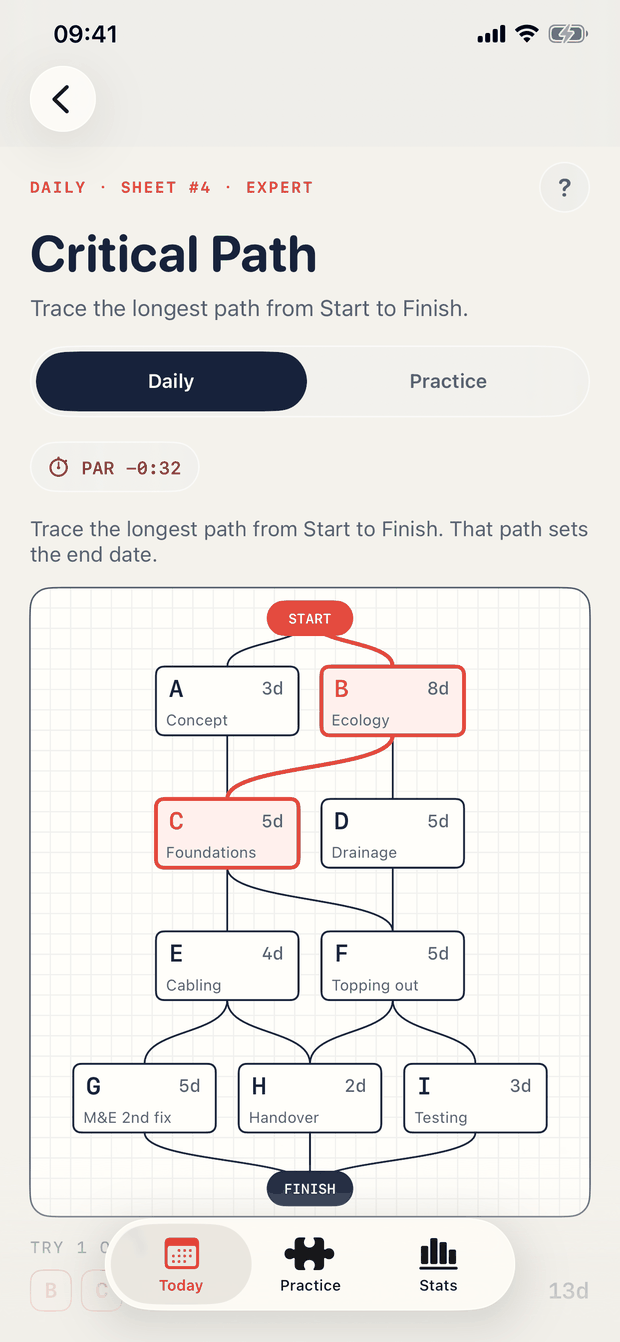
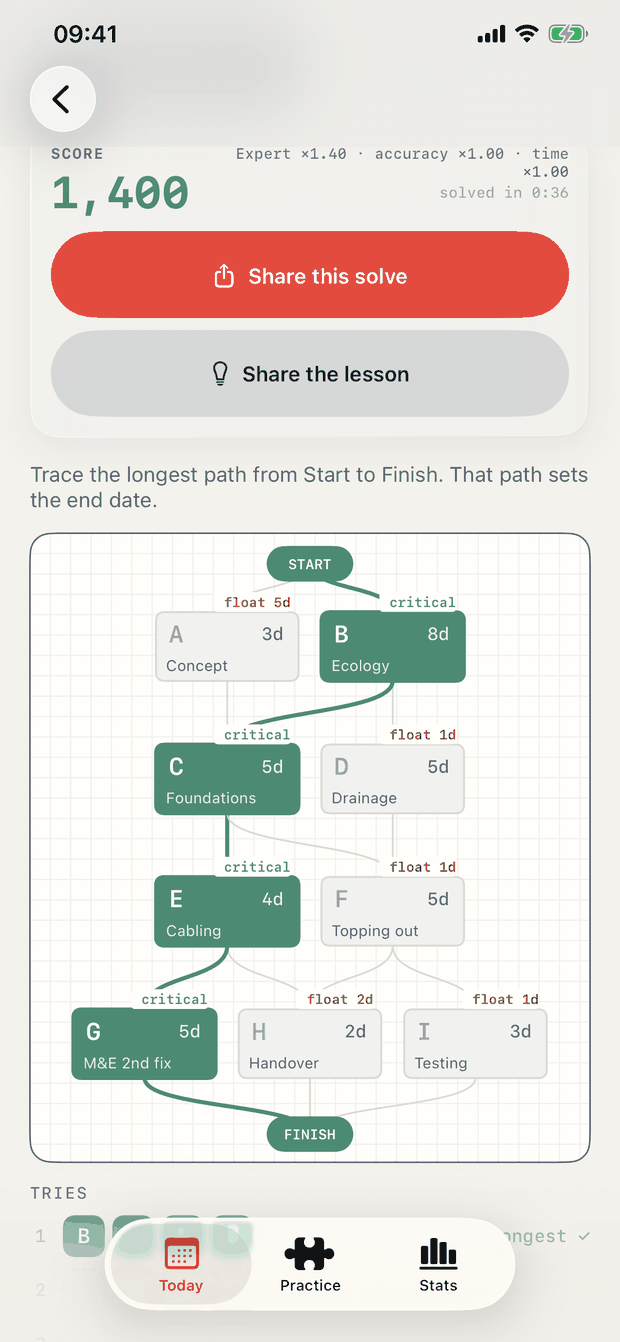
Get one wrong and the app opens the full working — the CPM table with float on every task, the earned value arithmetic line by line, the validation rule applied row by row. Most puzzle games test what you already know. This one is built around the days you do not.
The same board as everyone else
The puzzle is generated from the date on the device, not fetched from a server, so every player gets the identical sheet. A score therefore means something — and the share card carries the solved board underneath it, so the claim is checkable.
Grade, and currency
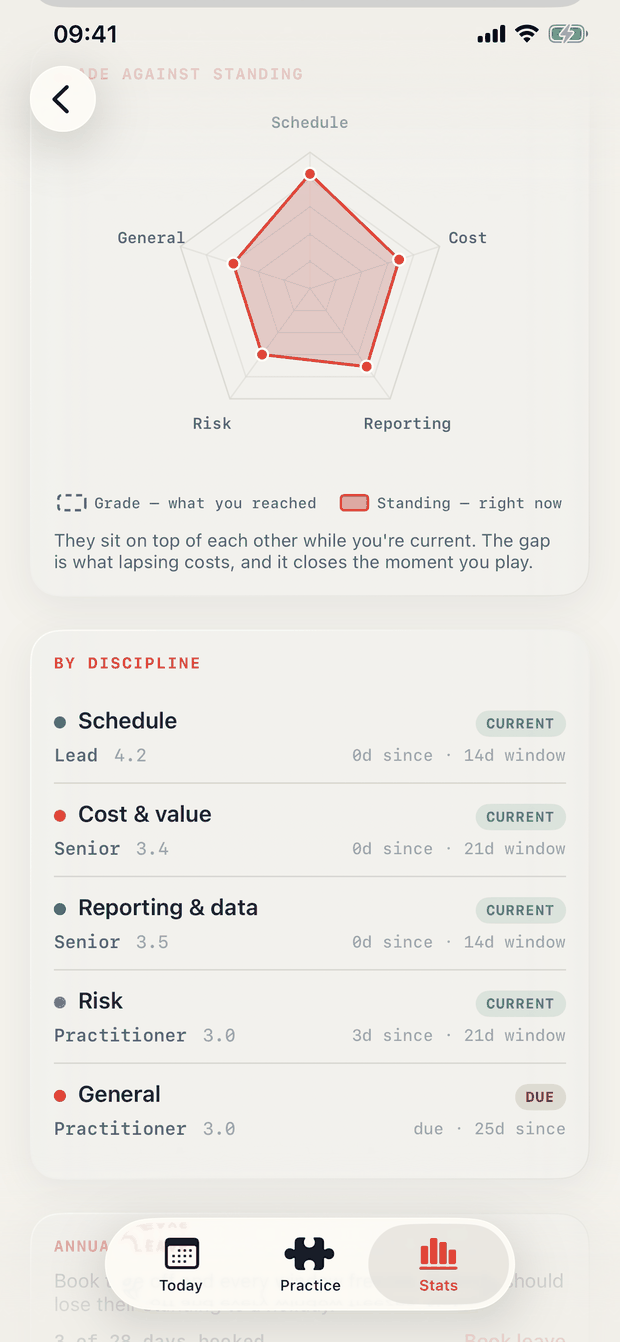
Grade is what you reached and never decays. Currency is whether you are still sharp, and it does — one sheet restores it. Book leave and every window freezes, because nobody should lose their standing to a holiday.
Levels that actually bite
Practise from Intro to Expert. Bigger networks, fewer tries, tighter par, and working aids that vanish above Easy. The app recommends a level from how you have been scoring, not from what you tell it.
Run your month like a project
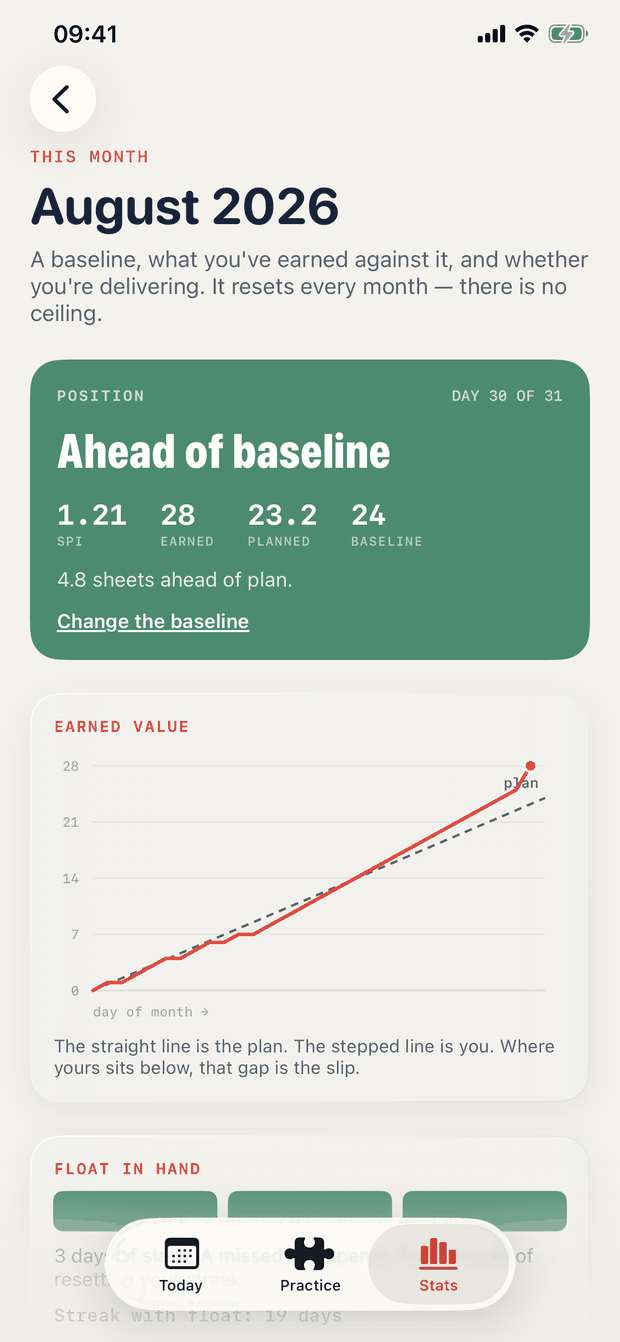
Set a baseline of sheets, earn against it, and watch your own SPI on an S-curve. Bank float by turning up; spend it on the day life gets in the way. The month closes with a report worth keeping.
Nothing leaves the device
No sign-up, no advertising, no analytics, and no backend to send anything to. Progress lives on your device and follows your own iCloud if you want it on more than one. Game Center is optional and handled by Apple.
The nineteen
Five disciplines. One is dealt as the day's headline sheet on a nineteen-day rotation, so each gets its turn as the one everybody is talking about.
Schedule — 7
Cost and value — 3
Reporting and data — 6
Risk — 2
General — 1
What it looks like
Questions
The ones worth answering before you install. The rest are on the support page.
Do I need to be a planner to play?
No. Every sheet is self-contained and states its own rules, and the working is explained in full whether you get it right or wrong — so the ones you miss are the ones that teach you something. Knowing the trade makes you faster, not admitted.
Does everyone get the same puzzle?
Yes. The board is generated from the date itself, not from a server, so every player on a given day is handed the identical sheet. That is what makes a score worth comparing — and the share card carries the solved board underneath the score, so a claim can be checked rather than taken on trust.
How long does a sheet take?
About five minutes for the daily. Each puzzle has a par time it measures you against; the clock pauses the moment you leave the sheet, so putting your phone down mid-solve costs you nothing.
What happens when I get one wrong?
You see the whole working. The critical path picked out with the float on every other task, the earned value arithmetic line by line, the validation rule applied row by row. Most puzzle apps mark you and move on; the point of this one is the days you get it wrong.
What are the nineteen puzzles?
Seven on schedule, three on cost and value, six on reporting and data, two on risk, and one general. They are listed with their subjects on the overview.
Do I get all nineteen straight away?
Five are open from the first launch — one from each discipline. The rest unlock as you solve daily sheets, so the library opens up rather than landing on you all at once. The one exception is the day's headline sheet: it is always playable, unlocked or not, so you are never shut out of the puzzle everybody else is doing today.
What are the five difficulty levels?
Intro through Expert, in practice mode. The levels are genuinely different rather than cosmetic: bigger networks (an Expert Critical Path deals twelve tasks, larger than any daily), fewer tries, tighter par times, and working aids that show at Intro and Easy and disappear above them. The app recommends a level from how you have actually been scoring, not from what you tell it.
What is the difference between grade and currency?
Grade is what you reached and it never decays — you did not get worse at cost forecasting because you had a busy fortnight. Currency is whether you are still sharp, and it does decay, on a window that differs by discipline. One sheet restores it. Holding grade and currency in all five disciplines at once is Zero Float, which is the only thing in the app you can actually lose.